The restaurant industry talks about “turnaround secrets” like they’re hidden formulas. Here’s the reality: most restaurant consulting firms are surprisingly transparent about their methods. The real insight isn’t what they’re hiding: it’s what struggling operators consistently ignore.
After working with hundreds of restaurants across Chicago and beyond, we’ve seen the same patterns repeat. Successful restaurant turnarounds follow proven frameworks that work when owners actually implement them. The challenge isn’t finding the right strategy; it’s having the discipline to execute it properly.

The Foundation: Stop Guessing and Start Measuring
Most restaurant turnarounds fail before they begin because owners skip the diagnostic phase. They think they know what’s wrong and jump straight to solutions. This approach wastes time and money.
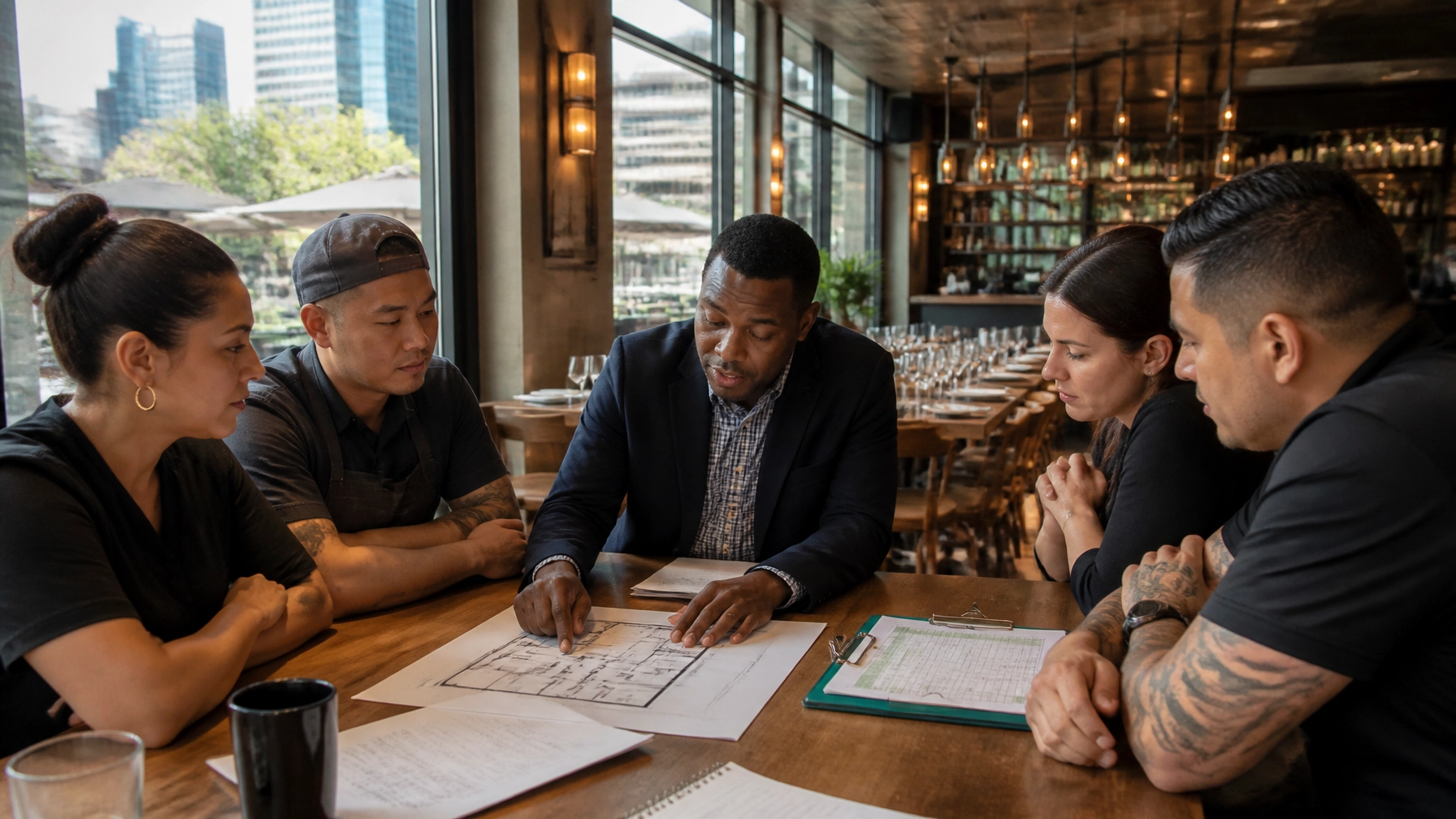
Effective restaurant turnaround starts with comprehensive data analysis. This means examining your POS system reports, reviewing customer feedback across all platforms, analyzing profit margins by menu item, and conducting objective operational observations during different service periods.
The diagnostic phase reveals which problems are actually fixable and which require more drastic measures. Sometimes the brand itself needs repositioning. Other times, the location or concept fundamentally doesn’t work. Honest assessment prevents throwing good money after bad.

Financial Performance: Beyond Cutting Staff
When restaurants struggle, most owners immediately reduce labor costs. This creates a downward spiral where service quality drops, driving away more customers and requiring further cuts.
Smart financial turnarounds focus on revenue optimization first. This includes reviewing pricing strategies, optimizing inventory management, renegotiating vendor contracts, and identifying hidden cost leaks. Many struggling restaurants discover they’re losing money on popular menu items that appear profitable.
Cash flow monitoring becomes critical during turnarounds. You need real-time visibility into daily sales, weekly trends, and monthly projections. Without accurate financial tracking, you’re operating blind.
Restaurant consulting firms excel at identifying these financial blind spots because they bring outside perspective and systematic analysis tools that most operators lack.
Operational Efficiency: Simplify Everything
Struggling restaurants often suffer from operational complexity that wastes time and creates inconsistency. The solution involves streamlining processes across every aspect of service.
Menu simplification typically generates immediate improvements. Fewer menu items mean better inventory control, faster kitchen execution, and improved food quality. This doesn’t mean offering less variety: it means eliminating items that complicate operations without driving significant revenue.
Service system optimization focuses on table turnover rates, order accuracy, and staff efficiency. Small changes in how orders are taken, prepared, and delivered can dramatically impact profitability without requiring major investments.
For multi-location operations, underperforming locations often need closure to protect the brand and redirect resources to viable markets. Individual restaurants might benefit from adjusted operating hours, modified service models, or restructured kitchen workflows.

Marketing and Brand Recovery
Traditional marketing approaches rarely save struggling restaurants. Expensive advertising can’t fix fundamental operational problems and often accelerates failure by bringing more customers to witness poor experiences.
Effective marketing during turnarounds focuses on rebuilding reputation through improved customer experiences first, then amplifying positive changes through strategic communication.
Social media becomes crucial for demonstrating real improvements. Regular posting about menu updates, staff training, facility improvements, and customer satisfaction shows commitment to change. This organic approach costs less than advertising while building authentic customer relationships.
When brand reputation suffers significant damage, complete rebranding might be necessary. This includes new logos, updated interior design, revised menu concepts, and fresh marketing messaging. The investment pays off when executed properly with supporting operational improvements.
Menu and Food Quality: The Customer Experience Driver
Menu optimization directly impacts both costs and customer satisfaction. Successful turnarounds typically involve recipe development, portion standardization, and quality consistency measures.
Data analysis reveals which menu items drive profits and which create losses. Many restaurants discover their most popular items generate minimal profit margins while less popular items provide strong returns. Strategic menu engineering addresses these imbalances.
Kitchen workflow improvements ensure consistent food quality during busy periods. This might involve equipment upgrades, staff training, or preparation process modifications. Consistency builds customer confidence and drives repeat business.
Pricing strategies need regular review during turnarounds. Many struggling restaurants underprice their offerings, creating unsustainable business models. Gradual price adjustments, combined with value improvements, help restore healthy margins.
Human Resources: Building the Right Team
Staff turnover often indicates underlying management problems that contribute to restaurant failures. Addressing human resource issues requires honest assessment of leadership effectiveness and staff development needs.
Training programs improve service quality while building staff confidence and reducing turnover. Investment in employee development creates better customer experiences and operational efficiency.
Management assessment might reveal the need for leadership changes. Sometimes owners need to step back from daily operations and hire experienced managers. Other situations require bringing in general managers with turnaround experience.
Staff retention strategies during difficult periods include clear communication about improvement plans, recognition programs for good performance, and fair scheduling practices that respect work-life balance.

Implementation Timeline: Patience and Persistence Required
Restaurant turnarounds take time. Most successful transformations require six to twelve months before showing sustainable results. Owners expecting immediate improvements often abandon effective strategies too early.
The assessment phase typically takes two to four weeks depending on restaurant complexity. Planning and strategy development require another two to four weeks. Implementation extends over several months with ongoing monitoring and adjustments.
Consistency throughout execution determines success. Many restaurant turnarounds fail because owners implement changes inconsistently or revert to old practices when results take time to materialize.
Regular progress monitoring using specific key performance indicators helps maintain momentum. Weekly sales reports, monthly customer satisfaction surveys, and quarterly financial reviews provide objective feedback on improvement efforts.
What Chicago Restaurant Owners Need to Know
Chicago’s competitive restaurant market requires specialized turnaround approaches that account for local customer preferences, seasonal variations, and neighborhood dynamics. Generic strategies often fail because they ignore these market-specific factors.
Local restaurant consulting firms understand Chicago’s unique challenges including high rent costs, labor market conditions, and seasonal tourism patterns. This local knowledge improves turnaroundsuccess rates compared to national consulting companies using standardized approaches.
Chicago restaurants benefit from community engagement strategies that build neighborhood loyalty. Local partnerships, community events, and neighborhood-focused marketing create sustainable cus-
tomer bases that survive economic fluctuations.
The Reality About Restaurant Turnarounds
Successful restaurant turnarounds require genuine commitment from ownership. This means willingness to make difficult decisions, invest necessary capital, and maintain discipline throughout implementation. Half-hearted efforts waste money and delay inevitable closure decisions.
External perspective provides crucial objectivity that owners often lack. Emotional attachment to original concepts, personal relationships with underperforming staff, and familiarity with existing processes create blind spots that prevent effective problem-solving.
Not every restaurant can be saved. Honest assessment sometimes reveals fundamental flaws in location, concept, or market positioning that make turnaround impossible. Recognizing these situations early prevents additional losses.
The most effective approach combines systematic analysis, proven strategies, and local market knowledge. When you’re ready to explore professional restaurant turnaround services, contact our team todiscuss your specific situation and develop a realistic recovery plan.
Restaurant turnarounds work when implemented properly with adequate resources and realistic timelines. The strategies aren’t secrets: they’re proven methods that require discipline and expertise to execute successfully.